

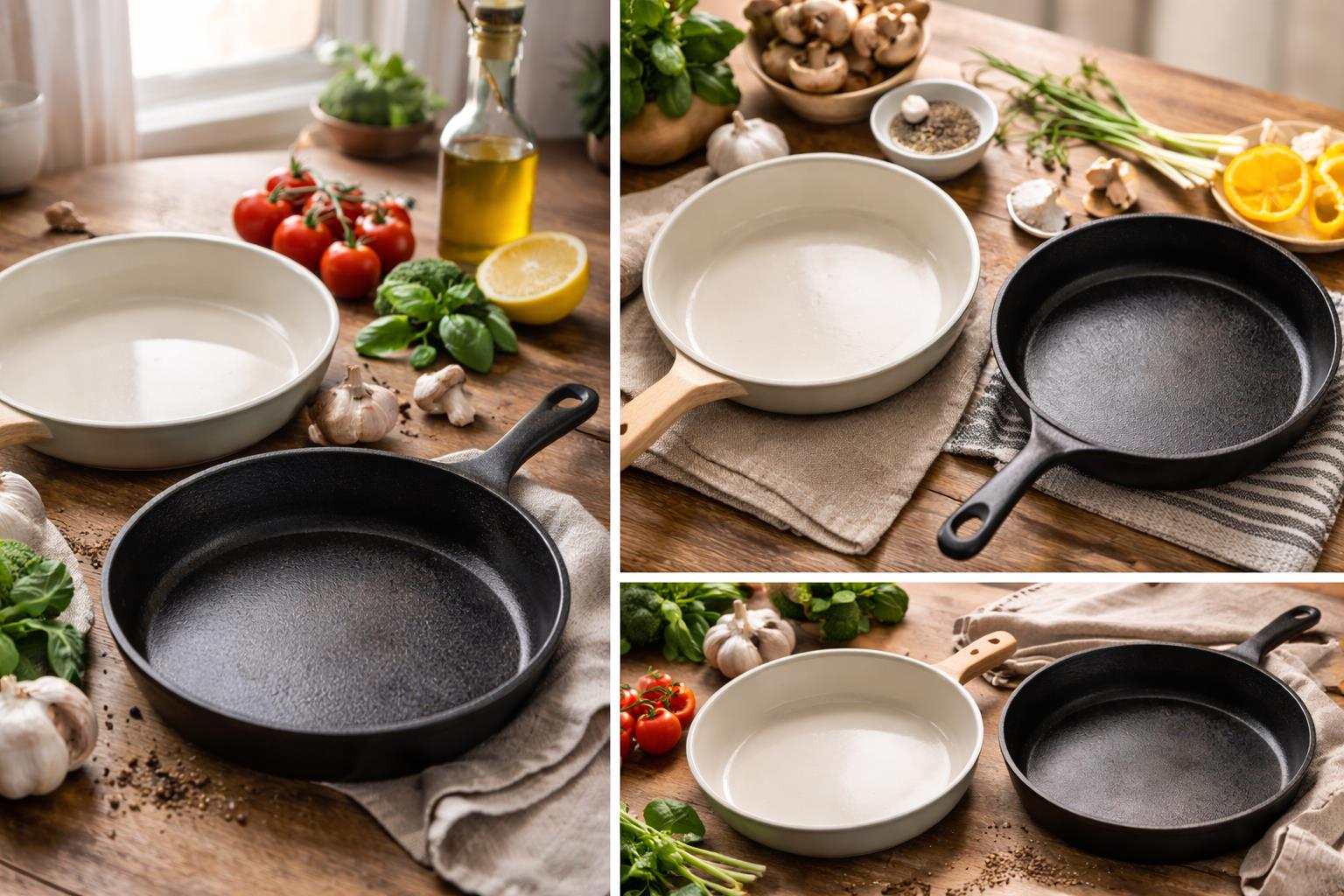
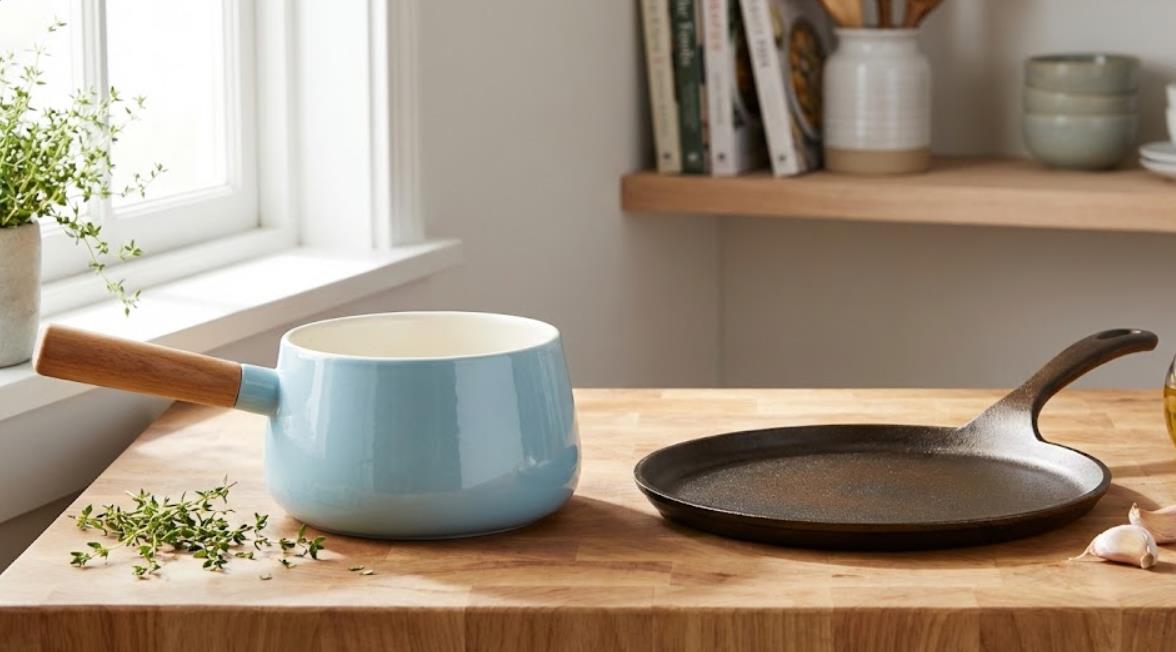
The ultimate choice between ceramic cookware vs cast iron comes down to how you cook and what you value most. Ceramic cookware is lighter, non-stick, and easier to clean, making it ideal for everyday meals. Cast iron offers superior heat retention and durability, which suits slow cooking, searing, and long term use. The better choice depends on convenience versus performance.
We totally get your dilemma. Deciding between ceramic cookware vs cast iron indeed feels like a debate between modern convenience and old-school tradition. On one hand, you have the lightweight, colorful world of ceramic that makes cleaning up a breeze. On the other, there is the heavy-duty, "last-forever" legacy of cast iron that professional chefs swear by.
At Dongsheng Ceramic Co. Ltd, we’ve spent over 25 years perfecting the art of ceramic manufacturing. We’ve seen firsthand how the right pan can change the way someone feels about cooking. Whether you are stocking a professional kitchen or just looking for the best pan for your Sunday morning eggs, understanding the nuances of ceramic cookware vs cast iron cookware is the first step toward a better meal.
Let’s walk you through the real differences, not just marketing claims. In this guide, you'll learn how each type is made, how it performs, what is safest for your kitchen, and which one makes more sense for your budget.
| Feature | Ceramic Cookware | Cast Iron Cookware |
| Weight | Lightweight and easy to maneuver. | Heavy; requires two hands for larger pans. |
| Heat Retention | Low to Moderate; cools down quickly. | Superior; stays hot for a long time. |
| Maintenance | Low; simple soap and water. | High; requires "seasoning" with oil. |
| Lifespan | 3–5 years (depending on coating). | Lifetime (can last 100+ years). |
| Non-Stick | Naturally non-stick from day one. | Becomes non-stick over time with care. |
| Best For | Eggs, fish, stir-fry, quick meals. | Searing steaks, baking bread, slow stews. |
Here is the simplest way to decide.
A helpful rule: ceramic is about convenience, cast iron is about performance and longevity.
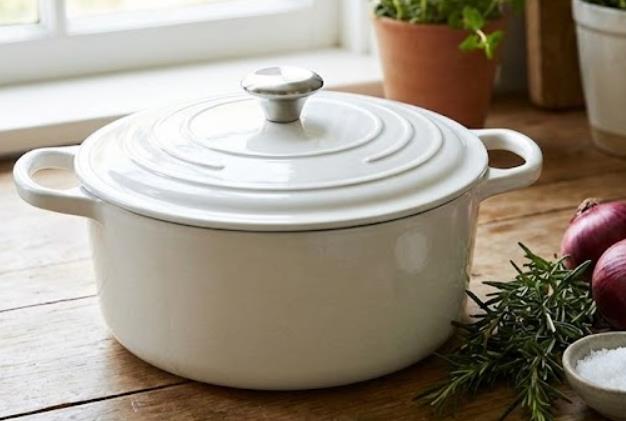
When most people say “ceramic cookware,” they usually mean metal cookware with a ceramic based nonstick coating, not a pot made entirely of clay.
Most ceramic nonstick cookware starts with an aluminum or stainless-steel base. Then a ceramic nonstick coating is applied and cured. Many ceramic coatings are made using a “sol-gel” process and are commonly described as silica derived coatings, basically materials related to sand and glass chemistry.
You will see a few common categories in stores:
Ceramic nonstick is designed for easy food release and easy cleaning. That is why many people love it for quick meals and low to medium heat cooking.
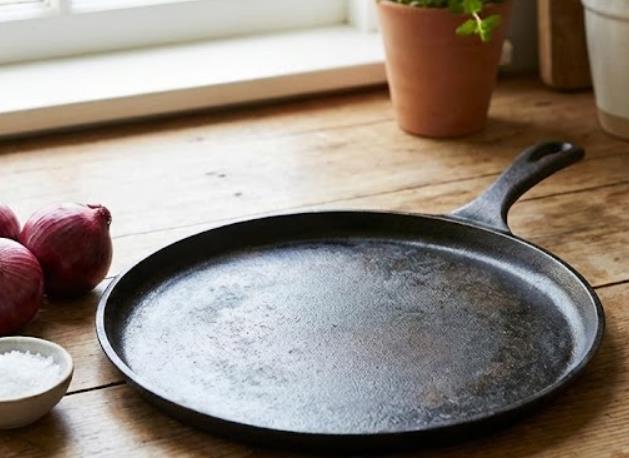
Cast iron cookware is made by pouring molten iron into molds. That creates a heavy pan with excellent heat holding power.
Manufacturers melt an iron alloy in a blast furnace and pour it into sand molds. Once it cools, the mold is broken away, leaving a solid, one-piece vessel. Because there are no rivets or glued handles, there is nothing to break or melt.
These two are very different in daily use.
Cast iron can survive extreme use. With basic care, it can last for decades. Iron is also incredibly dense. While it can rust if neglected, it can almost always be "rescued" with a good scrub and a fresh coat of oil. This is why you will often find cast iron pans in antique shops that still work as well as the day they were made.
Ceramic cookware can be a great fit, but it is not magic. So, let’s keep it real.
Cast iron is a classic for a reason, but it has a learning curve.
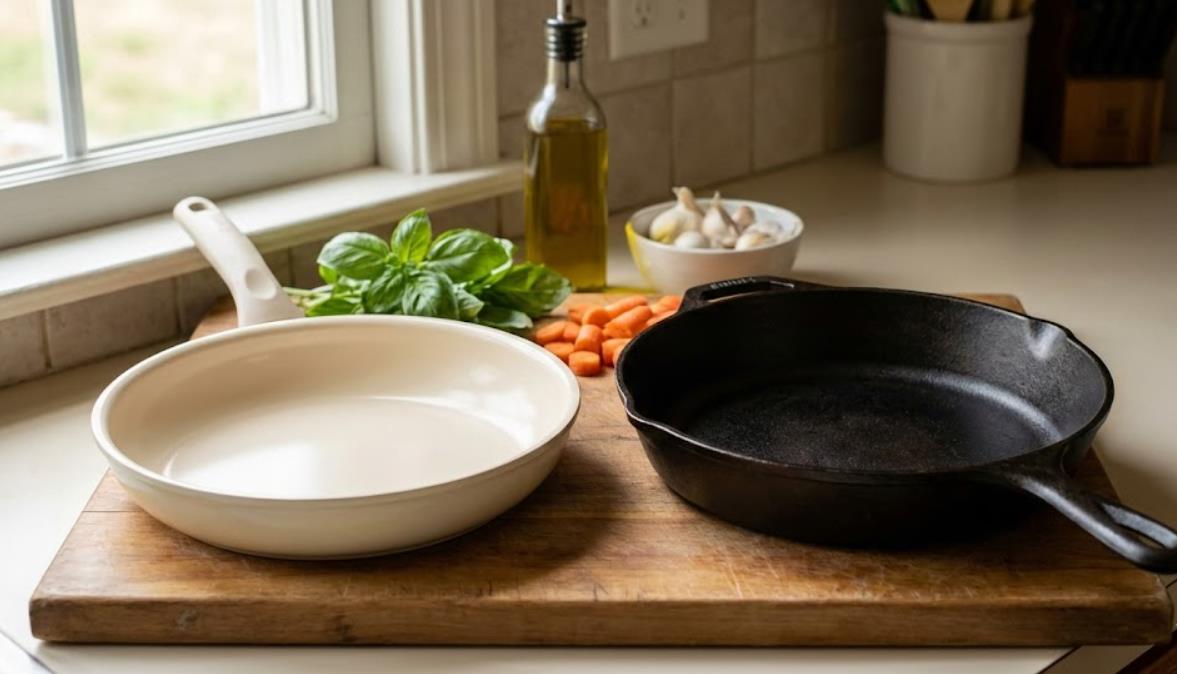
This is where your decision gets easy, because performance shows up fast in daily cooking.
If you often cook in short bursts, ceramic feels faster. If you cook thicker proteins or do long cooks, cast iron feels steadier.
If you have wrist or shoulder pain, or you simply want convenience, ceramic is often the better daily driver.
Some cookware discussions include PFAS. The FDA notes that PFAS can be present in certain food contact applications, including some nonstick coating applications, and that very small amounts can potentially enter food through packaging, processing, and cookware. Let’s dive into the details.
Ceramic cookware is considered a highly-safe, non-toxic choice because it is naturally free from PFAS, PFOA, and PTFE (Teflon), meaning it won't release harmful fumes even if accidentally overheated. These pans use a mineral-based "sol-gel" coating derived from silica that provides a slick, non-reactive surface without the need for synthetic chemicals.
To ensure maximum safety, we always recommend choosing high-quality brands that are certified lead-free and cadmium-free, as these standards guarantee no heavy metals will leach into your food. Because the surface is so effective at releasing food, it also supports a healthier lifestyle by allowing you to cook delicious meals with significantly less oil or butter.
One well-known fact is that cast iron can increase the iron content of food, especially with acidic foods and longer cooking. Studies and reviews have found higher iron content in food cooked in iron cookware and potential benefits for iron status in some contexts.
Cast iron is widely considered a safe and healthy cookware choice because it is naturally free of synthetic chemicals and "forever" toxins like PFAS or PFOA. A unique benefit of using these pans is their ability to naturally fortify your meals with small amounts of dietary iron, which can be particularly helpful for those managing iron deficiencies or anemia.
There is no universal winner. It depends on how you cook.
Either way, safe cooking habits matter more than the pan type. Avoid overheating, avoid cooking on damaged surfaces, and use the right utensils.
This is the section most people feel in real life.
Ceramic Cookware:
These habits help extend nonstick performance, which many sources describe as time-limited depending on use and care.
Cast Iron Cookware:
This is where the difference is big.
If you hate replacing pans, cast iron is hard to beat.
Let’s make the decision personal.
If you cook a mix of foods, many homes do well with a combo:
If you only want one, ask yourself: do you value easier cleaning more than deep searing?
Many professional kitchens lean on surfaces that handle heat and abuse. Cast iron fits that, especially for searing and oven use. Ceramic coated pans can still be useful for specific tasks, but they are more sensitive to wear.
If you are new to cooking and want quick wins:
If you want easy, go ceramic first. If you want a lifetime pan and you do not mind learning, go cast iron.
This is not just about the sticker price.
Sustainability is not only about materials. It is also about how long the product stays useful. A simple sustainability mindset is this: the greenest pan is often the one you use for a long time.
Cast Iron
Ceramic Cookware
Because cast iron never goes to a landfill, it is the more eco-friendly choice in the long run. However, ceramic is a massive improvement over traditional Teflon pans, which release harmful chemicals during production
Ceramic cookware is better for easy nonstick cooking and quick cleanup. Cast iron is better for searing, high heat cooking, and long term durability.
Yes, for most people. It can increase the iron content of food, especially with acidic cooking, which research has documented. If you have a medical reason to limit iron, check with your clinician.
Usually no. Ceramic nonstick performance tends to fade over time, and many sources describe a shorter working life compared with cookware like cast iron.
Ceramic cookware is usually easier to clean because food releases more easily. Cast iron is not hard once you learn the routine, but it needs drying and occasional oiling.
It is best not to. Metal utensils can scratch coatings and shorten the pan’s useful life.
If you want a pan that feels easy from day one, ceramic cookware is the better choice for most everyday meals, especially eggs, fish, and quick sautés. You will spend less time scrubbing, and the pan is lighter in your hands. Just treat it gently and keep the heat reasonable so it lasts as long as possible.
If you want a pan that can handle high heat, deliver serious browning, and stay with you for years, cast iron is the better choice. It takes a little care, but it pays you back with performance and longevity.
If you are building a practical kitchen, our honest suggestion is this: own one of each if you can. Use ceramic for convenience, use cast iron for power cooking.
At Dongsheng Ceramic Co. Ltd, we take pride in manufacturing high-quality ceramic products that power modern kitchens. From our strict QA/QC processes to our experience with global brands like Disney and Walmart, we ensure that every piece of ceramic we produce meets the highest standards of safety and performance.
Looking to source custom ceramic cookware for your brand? Explore our product catalog and see how our 25 years of expertise can help you deliver quality to your customers. Feel free to contact us anytime for a detailed consultation on your customization needs and inquiries.
2026-04-02
2026-04-02
2026-01-19
2026-01-19
2025-12-17
2025-12-17
2025-12-04
2025-12-04